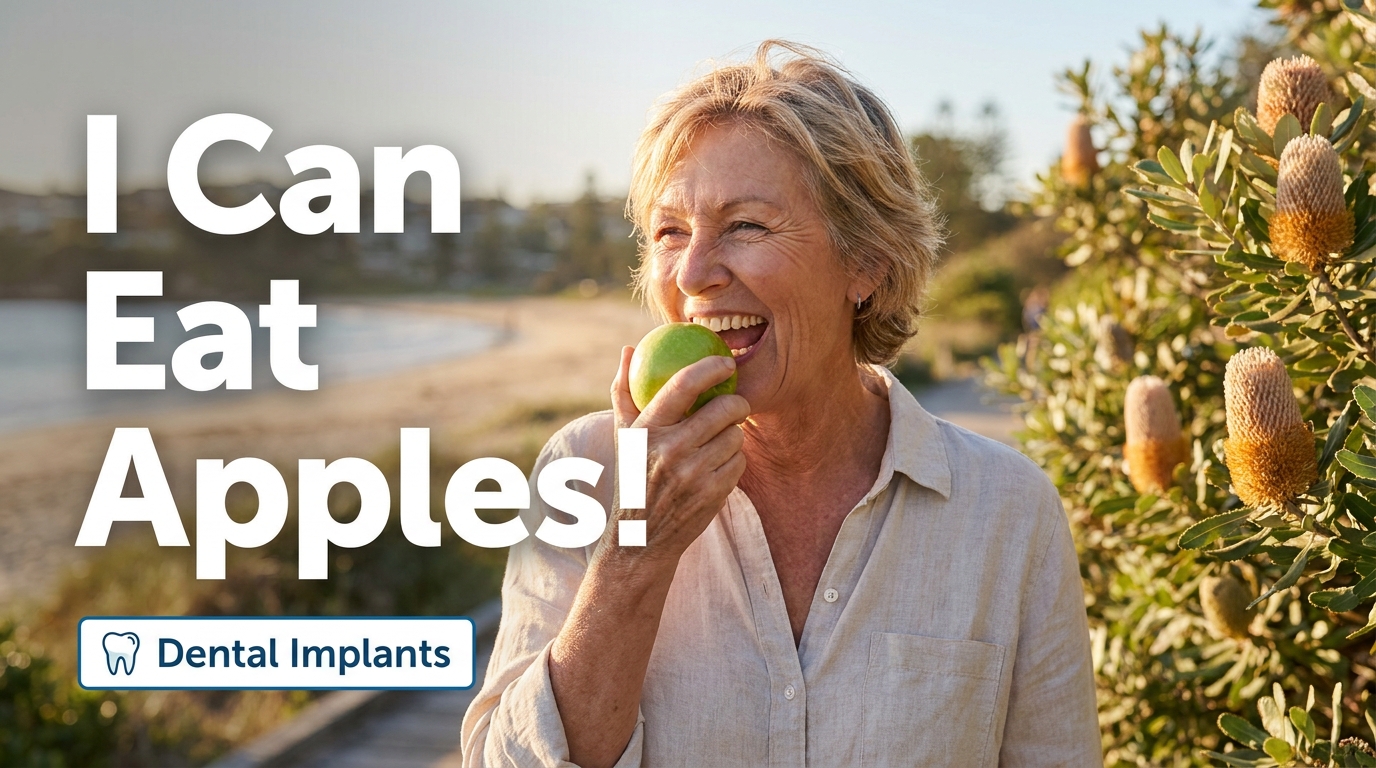
Let’s be honest for a second. Nobody wakes up on a Saturday morning, stretches, and thinks, “You know what? I can’t wait to spend my hard-earned savings on dental surgery today!”
It’s usually a thought that creeps in right after you’ve tried to bite into a crisp green apple and regretted it. Or maybe it’s when you catch a glimpse of yourself in a family photo and realize you’ve perfected the “closed-mouth smile” to hide a gap. Or perhaps you’re just tired of that partial denture doing a little “dance” every time you try to enjoy a decent steak at the pub.
You know the solution is a dental implant—the gold standard for replacing missing teeth—but there’s a nagging question anchoring you to inaction: “How much is this actually going to set me back?”
It’s the most common question we hear, and quite frankly, it’s a fair one. We’re Australians; we like things straight up, no fluff. So, let’s pull back the curtain on why dental implants are priced the way they are, why the “cheaper” options often cost more in the long run, and how you can make it work for your budget.
An Audio Extract
Why Isn’t There a Simple ‘Price Tag’?
If you walk into a showroom for a new ute, you’ll see a price on the windscreen. Dental implants are a little different because they aren’t just a product you buy off a shelf; they are a sophisticated medical procedure tailored specifically to your unique anatomy.
Think of it like a home renovation. Replacing a single loose tile is one thing; replacing a structural beam to hold up the roof is another. Several factors influence the total investment:
- The ‘Foundation’ Work: Just like a house needs solid ground, an implant needs healthy bone. If you lost your tooth a while ago, your jawbone might have shrunk a bit. Sometimes, we need to “top up” the bone (bone grafting) to make sure the implant has a sturdy place to live.
- The Engineering: You aren’t just paying for a “fake tooth.” You’re paying for a titanium post that acts as a new root, a connector, and a custom-crafted ceramic crown. This isn’t mass-produced plastic; it’s a medical device engineered to fuse with your body.
- The Artistry: The final tooth is often hand-finished by a technician to match the colour, shape, and translucency of your natural teeth. The goal? We want your partner—or even your mother—to be unable to tell which one is the implant.
- The Tech: From 3D cone-beam scans to precision-guided surgery, the technology we use ensures safety and longevity. It’s the difference between using a map and using GPS.
The “Hidden” Costs of the Alternatives
When staring at the numbers, it’s easy to think, “Maybe I’ll just get a denture or a bridge. It’s cheaper.” And upfront? You’re absolutely right. But let’s look at the ten-year timeline.
Traditional solutions often require maintenance. Dentures can become loose as your jawbone changes shape (because it doesn’t have a tooth root stimulating it anymore). They need relining, repairing, and eventually replacing. Plus, there’s the daily cost of adhesives and specialized cleaners.
Bridges are great, but they often require grinding down the healthy teeth on either side to support the missing one. If those supporting teeth eventually fail under the extra load, you’re suddenly dealing with a much bigger, more expensive problem.
Dental implants are designed to be a “one and done” investment for many people. When you factor in the longevity, the lack of daily “glue” costs, and the preservation of your other teeth, the value equation starts to shift heavily in favor of implants.
“I Should Have Done It Sooner”
We see patients from all walks of life—from the young tradie who lost a tooth in a footy mishap to the grandmother who just wants to eat corn on the cob again. Six months after treatment, the feedback is almost universally the same. It’s never a complaint about the price.
It’s always: “I honestly should have done it sooner.”
It’s the value of confidence. It’s the ability to order whatever you want off the menu without scanning for “soft foods.” It’s laughing without covering your mouth. That kind of freedom? It’s hard to put a price on it, but once you have it back, it’s priceless.
Managing the Investment: The Australian Advantage
We know that for many Australians, the “upfront” hurdle is real. The good news is that you don’t always have to raid your rainy-day fund.
Many patients choose to utilize their Superannuation to fund essential dental treatment. Under the “Compassionate Release of Superannuation” program, the Australian Taxation Office (ATO) may allow you to access your funds early for medical procedures that alleviate chronic pain or restore necessary function (like being able to chew properly!).
A Important Note: We are experts in teeth, not finance. Accessing your super early is a big decision that can impact your retirement savings and may have tax implications. We strongly recommend seeking independent financial advice before making any decisions regarding your superannuation. It’s about making sure your future smile doesn’t come at the expense of your future lifestyle.
Beyond superannuation, many clinics offer interest-free payment plans. This allows you to break the cost down into manageable, “coffee-sized” weekly or monthly payments, rather than a single lump sum.
The True Cost of Waiting
The one price we can’t calculate is the cost of not doing anything. Missing teeth lead to bone loss, which can eventually change the shape of your face, leading to that “sunken” look we all want to avoid. It puts stress on your remaining teeth, causing them to wear down faster.
Your Next Step
We don’t want you to lie awake at night wondering “what if” or worrying about the bill. The best way to get a clear, honest, and itemized understanding of your specific journey is to book a consultation.
No jargon, no sales pressure, and no judgment—just a clear map of how we can get you back to smiling, eating, and living with confidence.
After all, you’ve worked hard all your life. You deserve a smile that works just as hard for you.